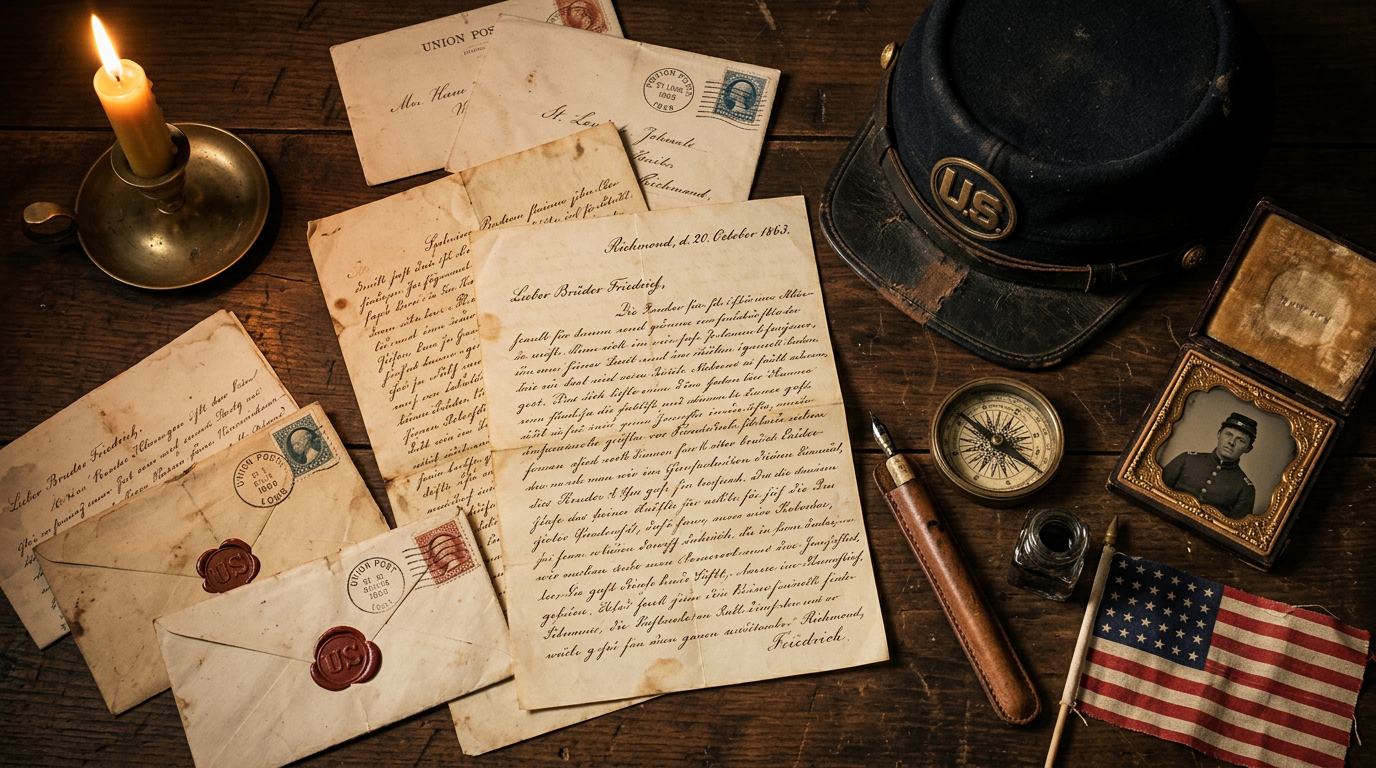
German Civil War Letters, Finally Readable
Roughly 200,000 German-born soldiers fought in the Union Army — and wrote home in Kurrent script that almost no one can read today. Upload a photo and get a clear English translation in minutes.
Drop a photo of your old letter here
or click to select — free & no sign-up required
The Largest Non-English Speaking Group in the Union Army
By 1860, over 1.3 million German-born immigrants lived in the United States. When the Civil War broke out, tens of thousands enlisted — forming entire German-speaking regiments in New York, Ohio, Wisconsin, Missouri, and Indiana. Leaders like Franz Sigel and Carl Schurz commanded divisions where German was the language of daily life, drills, and correspondence. The famous XI Corps was so heavily German it was sometimes called the "German Corps." These soldiers left behind a vast body of letters written in Kurrent — the standard German handwriting of the era — that document the immigrant experience on America's battlefields.
Written in Kurrent Under Field Conditions
The 1860s fall squarely in the Kurrent era — Suetterlin wouldn't be introduced for another 50 years. Civil War German letters were typically written with dull pencils on thin paper, often under harsh conditions: by firelight, on a soldier's knee, during brief pauses between marches. The handwriting is frequently more irregular and harder to read than peacetime correspondence. After 160 years, pencil on paper has faded significantly, creating additional challenges for transcription. These are among the most demanding historical documents to read — and among the most rewarding.
Invaluable for Genealogy Research
Civil War genealogy is one of the most active fields in American family history. Military records and pension files provide facts, but letters provide voices — your ancestor describing battles at Gettysburg or Shiloh, worrying about family back home, or reflecting on life in a new country at war. Letters mention fellow soldiers by name, describe specific locations, and reference relatives in both Germany and German-American communities. A single transcribed letter can break through genealogical brick walls that decades of record searches couldn't penetrate.
What you'll find — and what our AI can read
- Kurrent script — the standard handwriting of the 1860s
- Pencil on thin paper — often faded after 160+ years
- Mixed German-English content typical of immigrant correspondence
From old script to English text
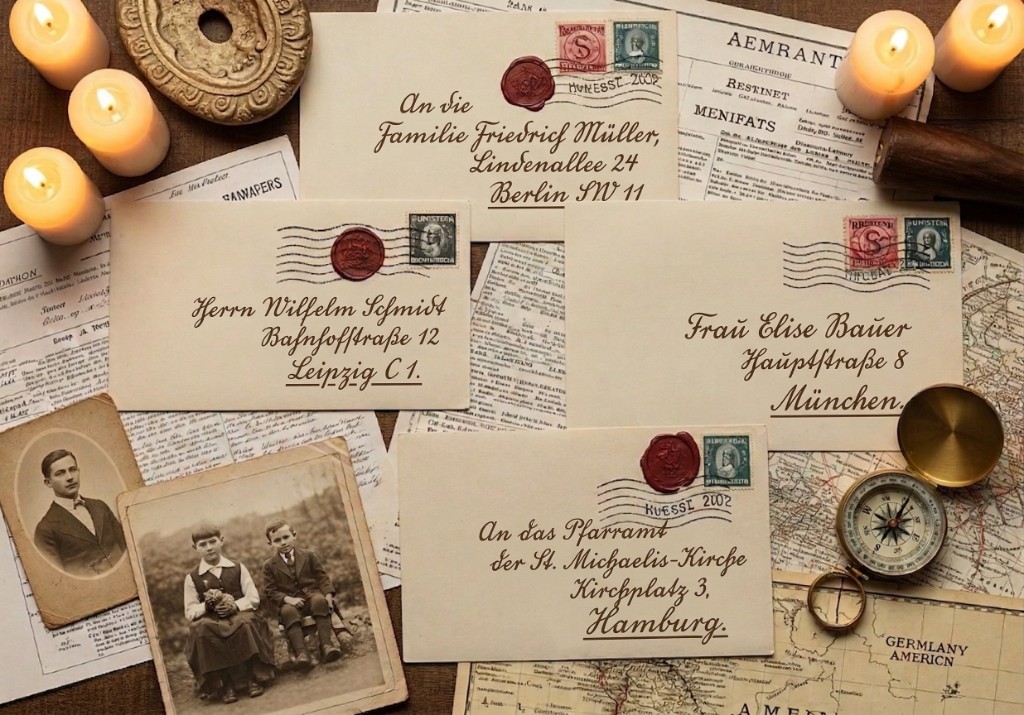
Related articles
German Civil War Letters: How to Transcribe Your Ancestor's Union Army Correspondence
200,000 German immigrants served in the Civil War. Their letters home were written in Kurrent script. Learn how to transcribe and read German Civil War correspondence.
Read articleFeldpost: Decoding Your Family's German War Letters from WWI and WWII
Guide to German Feldpost letters: how the military mail system worked, which scripts soldiers used, how to decode field post numbers, and how to get these fragile documents transcribed.
Read articleGerman-American Genealogy: Why Family Letters Are Your Most Powerful Research Tool
How handwritten German immigrant letters can break through genealogy brick walls. What they reveal that census records and ship manifests can't — and how to make them readable.
Read articleKurrent, Suetterlin, or Fraktur? How to Identify the Script on Your German Document
Can't read your German ancestor's handwriting? Learn to identify whether it's Kurrent, Suetterlin, or Fraktur — with visual clues, date ranges, and a quick identification method.
Read article