Pennsylvania German Documents, Decoded
From Germantown in 1683 to the thriving communities of Lancaster, Berks, and Lehigh counties — Pennsylvania's German heritage runs deeper than anywhere else in America. Unlock those handwritten letters and records.
Drop a photo of your old letter here
or click to select — free & no sign-up required
America's First German Settlement
German immigration to Pennsylvania began in 1683 when 13 families from Krefeld founded Germantown, now part of Philadelphia. Over the following century, hundreds of thousands of Germans settled in the colony, drawn by William Penn's promise of religious freedom. They came from the Palatinate, Württemberg, Hessen, and Switzerland — Mennonites, Amish, Lutherans, Reformed, and Moravians. By the time of the American Revolution, roughly one-third of Pennsylvania's population was German-speaking. This deep, early settlement created an extraordinarily rich documentary record: church registers in Kurrent dating back to the early 1700s, family correspondence spanning generations, and community records in Fraktur that are works of art in themselves.
The Pennsylvania Dutch Tradition
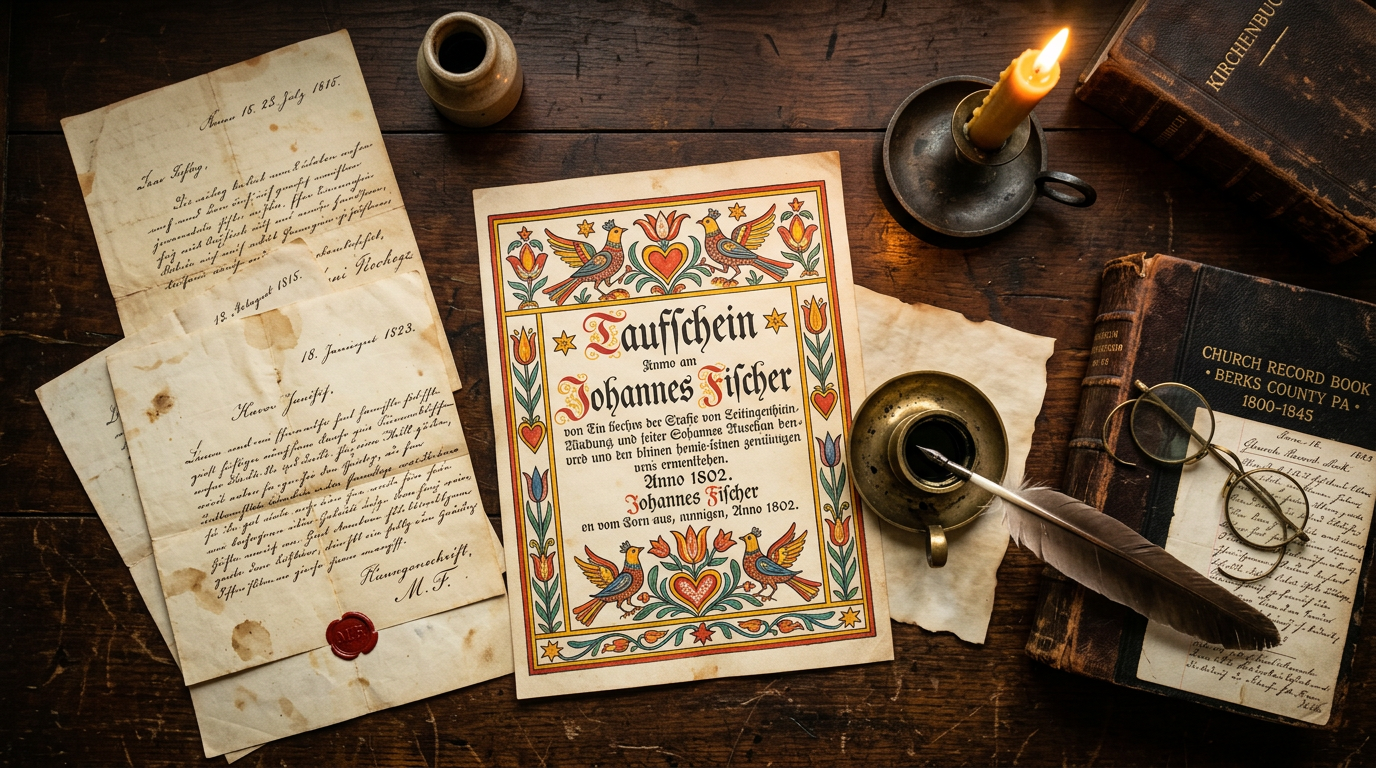
The term "Pennsylvania Dutch" (from "Deutsch") encompasses a diverse community that maintained German language and customs for centuries. Fraktur — ornate, hand-lettered and illustrated documents — became a distinctive Pennsylvania Dutch art form used for birth certificates (Taufscheine), house blessings, and bookplates. Church records were kept in German well into the 19th century, and personal correspondence in Kurrent continued among older generations through the early 20th century. The sheer volume of surviving documents — from tiny Fraktur Taufscheine to multi-generation letter collections — makes Pennsylvania one of the richest territories for German-American genealogical research.
Resources for Pennsylvania German Research
The Pennsylvania German Society, the Historical Society of Pennsylvania, and county historical societies across the Dutch Country region hold extensive collections. The Lutheran Archives Center in Philadelphia and the Moravian Archives in Bethlehem preserve centuries of church records. Many of these documents have been microfilmed and are available through FamilySearch. For families with Pennsylvania German roots, the combination of church records, Fraktur documents, and personal letters can trace ancestry back to the 1600s — if you can read the script.
What you'll find — and what our AI can read
- Kurrent script — in documents from the 1700s through early 1900s
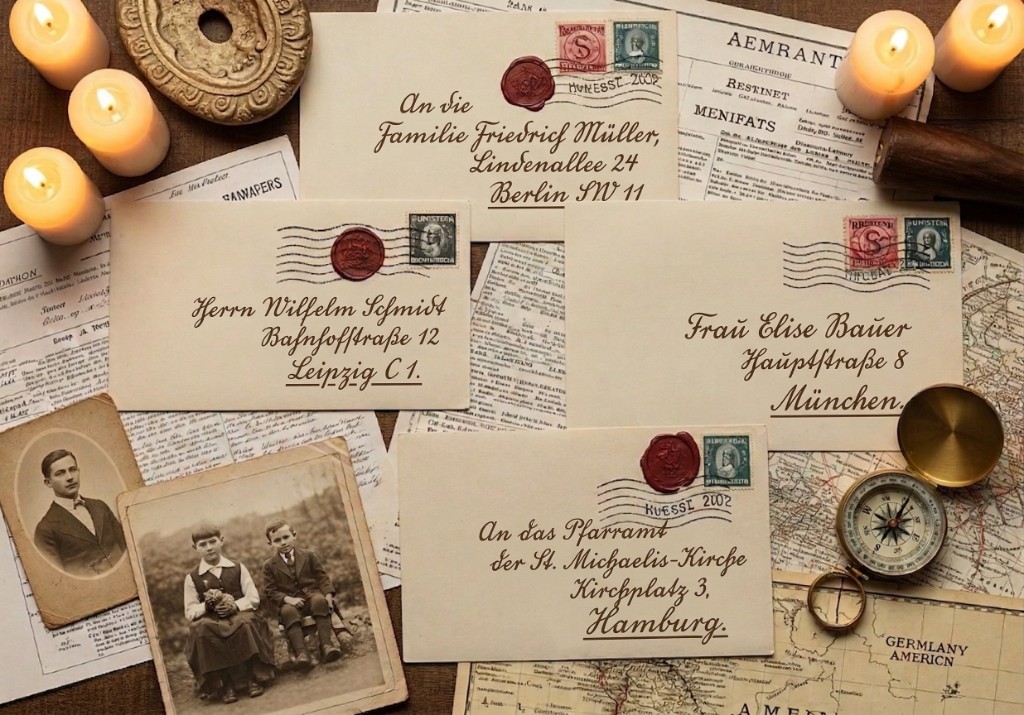
- Suetterlin — in letters from the early 20th century
- Fraktur — in printed records and the famous Pennsylvania Dutch Taufscheine
From old script to English text
Related articles
German Church Records (Kirchenbücher): The Genealogist's Guide to Finding and Reading Them
Where to find German Kirchenbücher online, what each record type contains (baptism, marriage, death), how to decode the script and Latin abbreviations, and how to get them transcribed.
Read articleGerman-American Genealogy: Why Family Letters Are Your Most Powerful Research Tool
How handwritten German immigrant letters can break through genealogy brick walls. What they reveal that census records and ship manifests can't — and how to make them readable.
Read articleKurrent, Suetterlin, or Fraktur? How to Identify the Script on Your German Document
Can't read your German ancestor's handwriting? Learn to identify whether it's Kurrent, Suetterlin, or Fraktur — with visual clues, date ranges, and a quick identification method.
Read articleFrom Shoebox to Story: Getting Your German Immigrant Letters Transcribed
Step-by-step guide to transcribing German immigrant letters. From photographing fragile originals to receiving readable English text — everything you need to unlock your family's transatlantic correspondence.
Read article