
Texas German Letters, Now in English
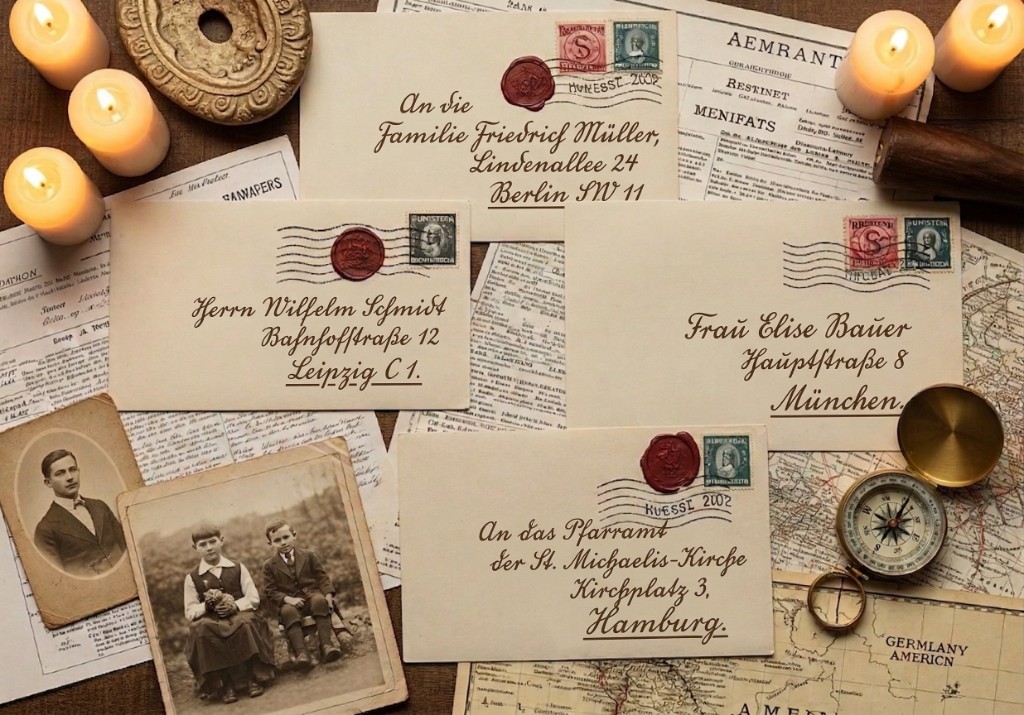
From Fredericksburg to New Braunfels, German settlers built communities across Texas Hill Country. Their letters and documents — written in Kurrent and Suetterlin — tell stories that shaped the Lone Star State.
Drop a photo of your old letter here
or click to select — free & no sign-up required
The Adelsverein and German Settlement of Texas
In 1842, a group of German noblemen formed the Verein zum Schutze deutscher Einwanderer in Texas (Society for the Protection of German Immigrants in Texas), commonly known as the Adelsverein. Between 1844 and 1847, they organized the emigration of over 7,000 Germans to Texas, founding towns like New Braunfels (1845) and Fredericksburg (1846). These settlers came primarily from Hessen, Nassau, and other regions, bringing their language, customs, and handwriting. The letters they wrote home — and the documents they created in their new communities — were written in Kurrent, the standard German script of the era.
A Distinct German-Texan Culture
Unlike many German immigrant communities that quickly assimilated, Texas Germans maintained their language and culture for generations. German was spoken in Hill Country homes, churches, and businesses well into the 20th century. A unique dialect — Texas German — developed and survived longer than almost any other German dialect in America. Churches kept records in German, local newspapers were printed in Fraktur, and personal correspondence continued in Kurrent and later Suetterlin through the 1940s. This cultural persistence means that Texas German families often possess unusually rich collections of German-language documents spanning a full century.
Preserving Hill Country Heritage
Organizations like the German-Texan Heritage Society (GTHS) in Austin actively work to preserve this legacy. University of Texas archives hold significant collections of Texas German correspondence. Family collections in Gillespie, Comal, and Guadalupe counties often include letters, church records, and legal documents written in old German scripts. If your family has roots in Texas Hill Country, these documents connect you to a remarkably well-documented chapter of German-American history.
What you'll find — and what our AI can read
- Kurrent script — used by settlers from the 1840s onward
- Suetterlin — in letters from the early 20th century
- Fraktur — in printed church bulletins and German-Texan newspapers
From old script to English text
Related articles
German-American Genealogy: Why Family Letters Are Your Most Powerful Research Tool
How handwritten German immigrant letters can break through genealogy brick walls. What they reveal that census records and ship manifests can't — and how to make them readable.
Read articleFrom Shoebox to Story: Getting Your German Immigrant Letters Transcribed
Step-by-step guide to transcribing German immigrant letters. From photographing fragile originals to receiving readable English text — everything you need to unlock your family's transatlantic correspondence.
Read articleGerman Church Records (Kirchenbücher): The Genealogist's Guide to Finding and Reading Them
Where to find German Kirchenbücher online, what each record type contains (baptism, marriage, death), how to decode the script and Latin abbreviations, and how to get them transcribed.
Read article400 Years of German Handwriting: A Timeline for Genealogists
Timeline of German handwriting from 1500s Kurrent to 1941 Latin switch. Date your ancestor's documents by their script and understand what changed — and why.
Read article